Exploring a New City by Hire Car: A Practical Route Guide
Build a practical self-drive route in a new city with verified stops, road and weather checks, legal parking, offline navigation and the right vehicle group.
Exploring a new city by hire car works best when the vehicle solves a real transport problem. A useful itinerary verifies that places are open and legally accessible, groups stops in the same direction and allows time for parking, walking and changing conditions. That turns the vague promise of “hidden gems” into a safe, achievable self-drive route.
Decide whether a hire car adds value that day
If the old town, market and museums sit in one walkable centre, keeping a car all day may create parking and traffic work rather than freedom. A car becomes more useful when archaeological sites, beaches, viewpoints or rural places lie in different corridors. Split the trip into a walking day, an eastbound day and a westbound day instead of driving between every attraction.
Judge the complete day rather than the headline rental rate. It can be sensible to hire only for the days that need a vehicle. Our practical guide to the benefits of car hire explains when that flexibility is genuinely useful.
Build a verified stop list—not a collection of viral pins
A social-media location is not proof of public access. It may be private land, a seasonally closed road, a bay reached only by boat or a trail that starts well beyond the car park. Check the official museum, municipality, protected-area or tourism page for current access, opening and parking information. If you cannot verify a stop, keep it as an optional backup rather than the anchor of the day.
Anchor stop: the purpose of the day, with access confirmed.
Nearby stop: a short visit in the same direction or from the same car park.
Backup: an alternative for weather, roadworks or overcrowding.
Remove: private, prohibited or unverified places.
Cluster the map and give each day one main direction
Straight-line distance hides mountains, coastal bends, town crossings and boat transfers. Mark your accommodation as the base and sort places into east, west, inland and centre. Two substantial stops and one short break in the same corridor are usually more realistic than six pins in opposing directions. Add time for parking, walking, food and daylight rather than relying on the app’s driving time alone.
Group places around your base by direction instead of filling one day with unnecessary backtracking.
Recheck roads and weather on the morning of departure
A saved route is not a live road report. Türkiye’s General Directorate of Highways publishes roadworks, closures, a daily bulletin and route-analysis information. Weather warnings, wildfire precautions, heavy rain or high wind can change access. Review the KGM and Turkish State Meteorological Service information before leaving and do not treat one navigation estimate as the only source.
Set a daylight turnaround time, identify fuel or charging options and save a second main-road route. A gravel-looking road is not automatically permitted because the rental is an SUV. Follow signs, official closures and the use restrictions in the rental terms.
Label every stop by its last-mile access
Drive-to means a legal car park is close to the attraction. Park-and-walk describes old towns, canyons and ruins where the vehicle reaches only the start. Transfer means a boat, shuttle or public transport completes the journey. A rental car does not promise door-to-door access; knowing the final section changes footwear, water and timing.
Use signed, legal parking in city centres. Ask whether the accommodation has parking and avoid an unnecessarily large vehicle for narrow streets. If the first car park is full, use a saved alternative instead of stopping on an unsafe verge.
For historic centres, one legal car park followed by a walking loop is often the efficient option.
Prepare an offline route and a safety margin
Download the area for offline use and save the accommodation, car parks, fuel stops and return route. Set the navigation before moving; never hold a phone while driving. If possible, let a passenger handle changes and keep the device in a safe mount. Share the day’s broad plan and carry water, a charging cable and the assistance number.
Set the route while stationary and retain an offline map for areas with weak coverage.
Match the vehicle and compare the real total
A compact car can suit two travellers, light luggage and city parking. Families should check luggage space with every seat occupied. A larger vehicle is not automatically better on narrow or winding roads. Compare vehicle groups using passengers, bags, transmission and the real route.
Current Turkish terms from Enterprise, SIXT and Avis show that age, licence history, card/deposit, mileage, additional-driver and return rules vary by supplier and vehicle group. Do not transfer another company’s rule to Time Rent A Car. Compare fuel, tolls, parking, mileage, extra drivers, protection and any one-way fee alongside the daily price. Read the protection options, confirm a different-location return in writing and use the pre-trip requirements guide for documents and pickup checks.
Antalya example: plan by corridor, not by checklist
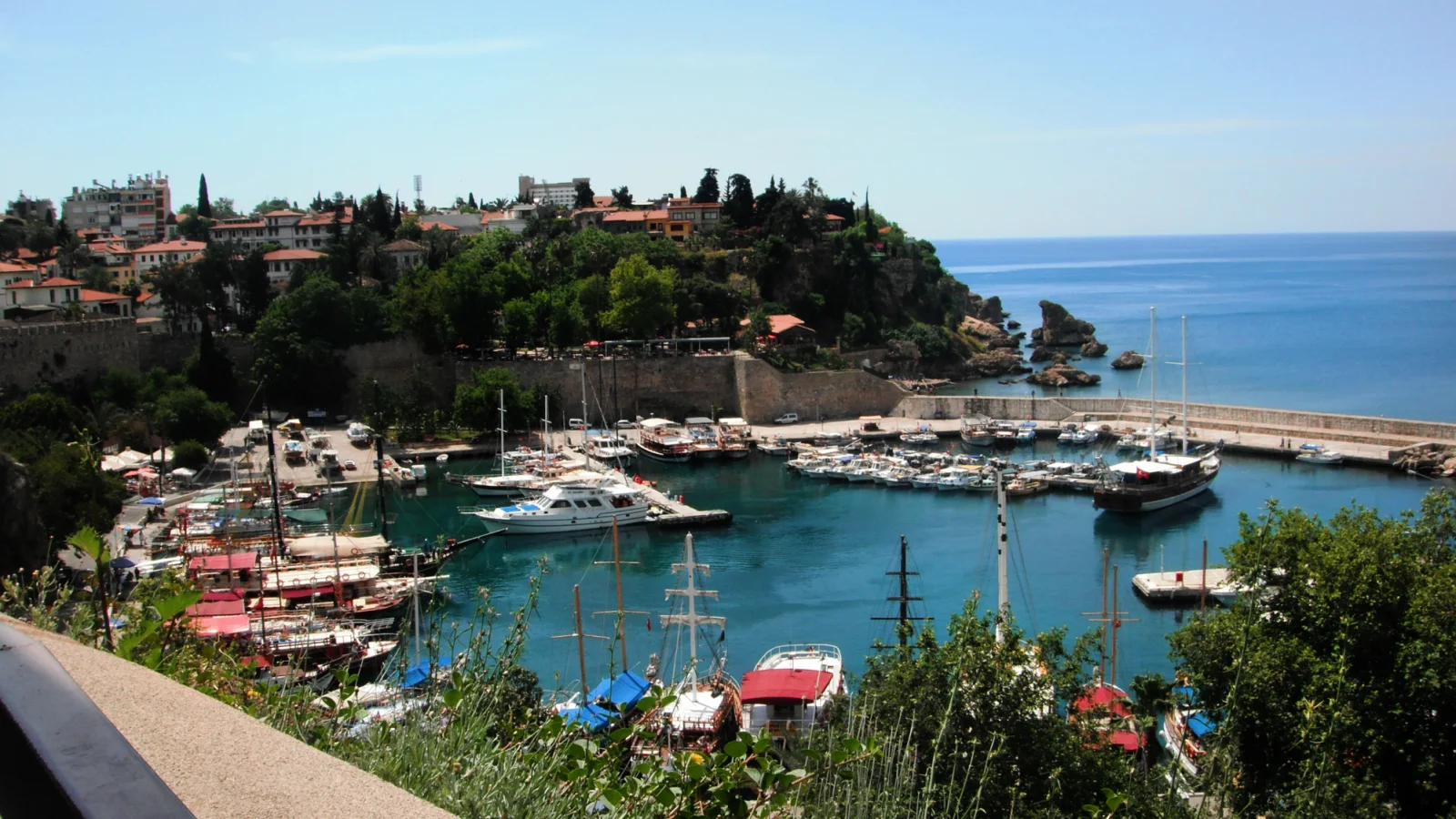
In Antalya, park once and walk for Kaleiçi, the harbour and central museums. Keep eastern sites such as Perge and Aspendos on one day, the Phaselis-Kemer direction on another and an inland destination such as Termessos on a weather-checked daylight plan. The activities and sensible order are detailed in the Antalya road-trip guide. If the route starts after a flight, confirm the Antalya Airport meeting arrangement; for booking and collection decisions, see the Antalya car-hire guide.
Frequently asked questions
How many stops should a new-city driving day include?
The activity duration matters more than the mileage. Two main stops and one short break in the same direction normally preserve time for parking and walking; a canyon or major archaeological site may need the day’s only anchor slot.
How can I tell whether a “hidden gem” is safe to visit?
Look for an official access notice, a legal parking point and current visiting information. Exclude private land, closed roads and locations supported only by a social-media pin.
Can a rental car be driven on an unpaved road?
There is no universal yes. Check the current road status, signs and your chosen supplier’s contract. Vehicle class does not replace permission.
What if the route changes?
Use the backup stop, protect the return time and tell the rental company if collection or return arrangements are affected. Review the full pickup and return process.
Once your route, passengers, luggage and collection point are clear, contact Time Rent A Car to confirm the available vehicle group and current terms in writing.
Photo sources
Cover: Ramazan Toygun / Pexels, Antalya coastal road; cropped to 16:9 and converted to WebP.
Plan a realistic Muğla road trip by grouping Akyaka, Dalyan, Marmaris, Datça and Bodrum into sensible coastal routes, with practical access and car-hire advice.
We use Google Analytics 4 through Google Tag Manager and Yandex Metrica for anonymous usage statistics only with your consent. Essential cookies are required for reservations.



 Travel Guide